A paper was published at the Conference on Computer Vision and Pattern Recognition (CVPR 2026). Congratulation to all the co-authors for their contributions.
Senior Multimodal AI Researcher
Aveen Dayal
Building AI systems that can be understood, evaluated, trusted, and deployed beyond controlled settings.
I work across multimodal, generative, and language models, studying how their behaviour can be interpreted, how they generalize under distribution shift, how their outputs can be evaluated and attributed, how digital content can be protected, and how inference can be made more efficient.
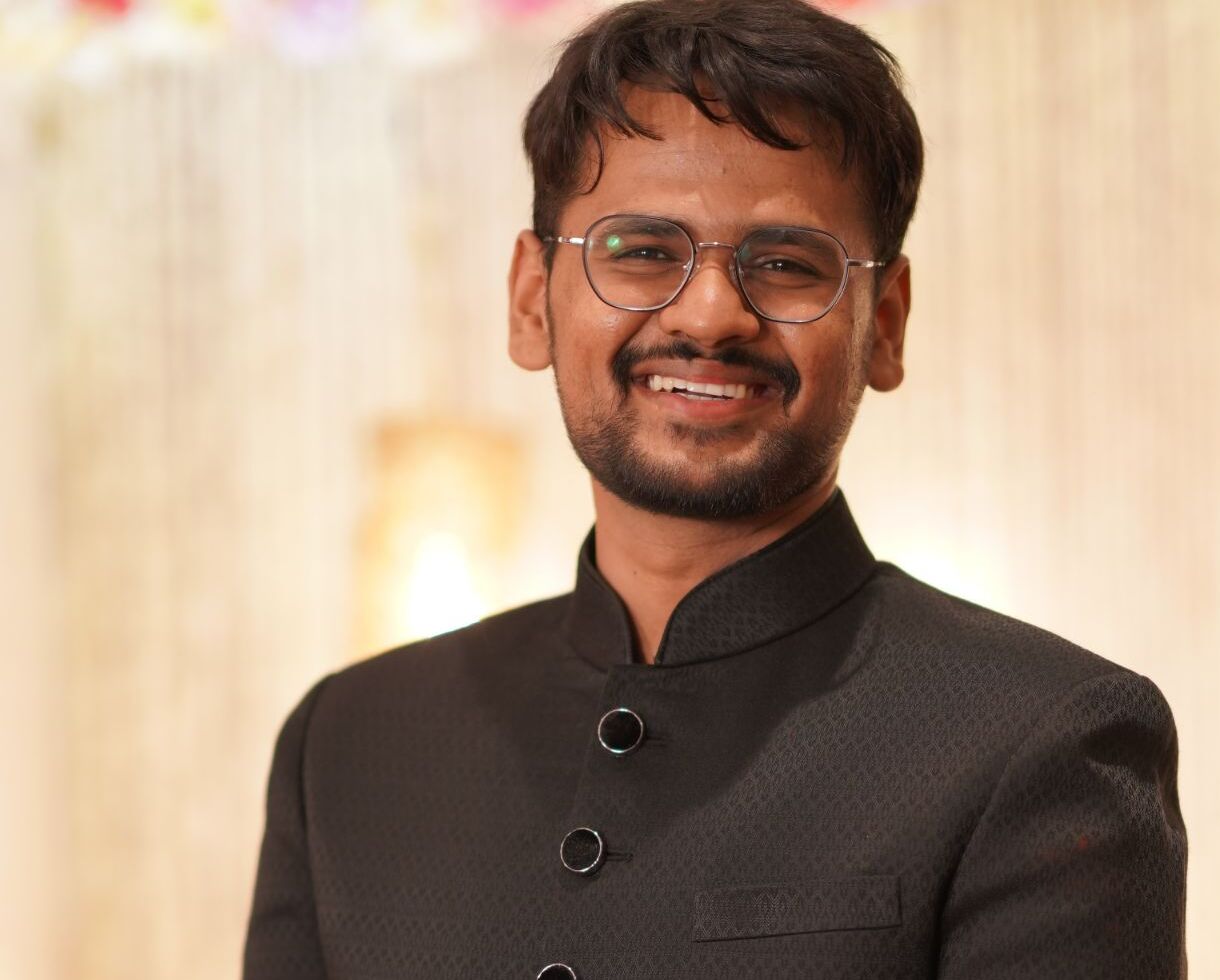
Bengaluru, India
Research framework
Towards Reliable AI Systems
Reliability is not a single property of a model. It emerges when a system can be understood, remains dependable under changing conditions, is evaluated against meaningful criteria, supports attribution and protection of its outputs, and can operate within real deployment constraints.
A connected research programme
Reliable AI Systems
Select a direction to see how it contributes to the broader reliability problem.
01Understand
Mechanistic Interpretability
Studying the internal representations, components, and computational mechanisms that contribute to model behaviour.
02Adapt & Generalize
Domain Adaptation · Domain Generalization
Adapting models to changed target distributions and developing systems that remain effective on previously unseen domains.
03Evaluate
Robust Evaluation Frameworks
Designing evaluation systems that reveal capabilities and failures across modalities, tasks, and distribution shifts while producing grounded, interpretable evidence.
04Trace & Protect
Content Attribution · Content Protection
Studying how outputs relate to influential data or representations, and developing mechanisms for provenance, ownership verification, watermarking, and misuse deterrence.
05Optimize
Inference Optimization
Reducing latency, memory, and computational cost while preserving model capability, output quality, and practical usability.
Building truly reliable AI requires progress across several interconnected dimensions, and no single project—or researcher—can address them in isolation. My work has allowed me to study this broader problem from different perspectives: understanding model behaviour, improving generalization under distribution shift, designing more rigorous evaluation frameworks, tracing and protecting generated content, and making inference more efficient. These experiences have given me a broad foundation for examining how these pieces fit together, while I continue to deepen that understanding through research and collaboration.
Read more about my journeyNews and milestones
Recent updates
A concise record of research, teaching, service, and career milestones.
A paper was published at the Winter Conference on Applications of Computer Vision (WACV 2026). Congratulation to all the co-authors for their contributions.
Successfully defended my Ph.D. Thesis titled "Adaptability and Generalizability of Deep Learning Models". Very grateful to all my mentors, collaborators, friends and family for their guidance and support throughout my Ph.D. journey.
Joined Dolby Advanced Technology Group India as a Senior Multimodal AI Researcher.
Completed my internship at Adobe Research India. Very grateful to my mentor, Dr. Joseph K. J., for giving me the opportunity to work on exciting multimodal generation research problem.
A paper was accepted in the IEEE Transactions on Image Processing journal. Congratulation to all the co-authors for their contributions.
View earlier updates
2024
Completed my internship at Microsoft Research India. Very grateful to my mentor, Dr. Akshay Nambi, for giving me the opportunity to work on exciting inference optimization and multimodal adaptation research problem.
A paper was accepted at the European Conference on Computer Vision (ECCV 2024). Congratulation to all the co-authors for their contributions.
MADG: Margin-based Adversarial Learning for Domain Generalization was listed among ACM IKDD Premier Papers published from India.
Received the Excellence in Research Award 2024 from IIT Hyderabad.
2023
A paper was accepted at the IEEE International Symposium on Smart Electronic Systems (IEEE-iSES 2023).
Received a Microsoft Research Travel Grant to attend NeurIPS 2023 in the United States.
MADG was accepted at the Conference on Neural Information Processing Systems (NeurIPS 2023).
Began PMRF teaching activities for the NPTEL course Deep Learning for Computer Vision.
Served as a reviewer for Applied Soft Computing.
A paper was accepted in IEEE Access.
Presented research at the 3rd INMOST Workshop on Indo-Norwegian Collaboration in Intelligent Offshore Mechatronics Systems, University of Agder, Norway.
Began a research internship at the Autonomous and Cyber-Physical Systems Lab, University of Agder.
A paper was accepted in IEEE Sensors Journal.
2022
Served as a reviewer for IEEE Sensors Journal.
Served on the organizing committee of the Indo–Norway Workshop on Smart Sensing, Communication and Machine Learning for Autonomous and Cyber Physical Systems at IIT Hyderabad.
Began PMRF teaching activities on Foundations of Machine Learning at B. V. Raju Institute of Technology.
A paper was accepted in Applied Soft Computing.
Served as a reviewer for Sādhanā.
Completed Ph.D. coursework with a GPA of 9.19/10.
Received the Prime Minister’s Research Fellowship (PMRF).
A paper was accepted in the Journal of the Acoustical Society of America.
2021
Joined the Department of Artificial Intelligence at IIT Hyderabad as a Ph.D. scholar.
2020
Joined the Autonomous and Cyber-Physical Systems Lab at the University of Agder as a visiting researcher.
Research and collaboration
Interested in reliable multimodal and generative AI?
I am always glad to discuss research, collaboration, and emerging questions across model understanding, evaluation, and deployment.